.jpeg)

Getting thousands of residents involved in policy? For many local governments, that's still a challenge. Not for Goeree-Overflakkee. With one central participation platform, it now reaches a broad audience, on major policy decisions and local projects alike. What used to be fragmented and ad hoc has grown into a structured approach that makes participation visible, accessible, and scalable.
The platform has built a growing community of residents who can be invited to take part again.
Someone is registered on the platform in approximately one out of every five households.
Projects, communication, resident input, and analysis are brought together in one place.
In 2022, the Goeree-Overflakkee city council adopted its "community participation" policy paper. The document was well-researched, but hard to translate into practice.
“The policy itself was strong, but it was also a difficult, almost academic document.”
- Willeke Moerkerk, Program Manager, Goeree-Overflakkee
That's why the organization received a clear mandate in that year's coalition agreement: make sure the participation policy actually gets implemented. In 2023, Willeke took charge of that mandate. After drafting a clear program plan, she quickly concluded that the existing way of working fell short:
"Colleagues often just did whatever seemed logical at the time. Sometimes a team ran a survey, sometimes an outside agency was hired to set up a process. There was hardly any structural overview or shared approach."
The implementation plan included one clear priority: selecting and launching a centralized digital participation platform.
The platform needed to serve several purposes at once:
The local government considered several solutions, with ease of use as a key requirement.
“It was important that our project leads could work with it easily. The platform needed to feel intuitive and remove potential barriers. After speaking with several reference municipalities and completing a thorough evaluation, we chose Go Vocal.”
The introduction of the platform also changed how teams work internally, explains communications officer Janine Roos.
“Project leads and policy advisors who want to involve residents through the platform now start by speaking with the platform manager. Together, we look at the best way to organize the participation process and how to approach the online component.”
These conversations cover questions such as which phases the project should include, what the team wants to ask residents, and how it will report back on the results.
This helps colleagues think about participation earlier and approach it more deliberately. At the same time, the platform makes the process feel less daunting.
“In the past, participation sometimes seemed complicated. Now we can simply say: come and talk to us, and we will look at the best way to set up the project together. Before you know it, the project is online.”
Digital participation is often associated with major policy projects. Goeree-Overflakkee uses its platform for those larger processes, but it also deliberately brings residents into smaller, hyperlocal decisions.
One example involved asking residents on a small number of streets about the introduction of a residential parking permit system.
“In cases like these, only the residents directly affected are given access to the participation project.”
Residents receive a letter explaining the proposed change and can then respond online.
“We check our decisions with the people who will experience their impact directly.”
Goeree-Overflakkee deliberately asks residents to register for most participation projects. This helps the local government build a lasting community of people who can be involved again.
The platform now has more than 4,600 registered users across approximately 20,000 households. This means that someone is registered in roughly one out of every five households in the municipality.
That has made a noticeable difference when launching new projects.
“We can now email residents directly when a new project goes live. This direct approach leads to a significantly higher response and gives us a strong community we can easily invite again. We no longer have to start from scratch each time.”
Registration is only one part of the approach. To keep participation accessible and inclusive, the local government also offers other ways to take part.
Online projects are combined with in-person meetings where possible, and residents can complete surveys on paper. These paper responses can then be added to the platform and included in the same analysis as the online input.
The platform has not only expanded Goeree-Overflakkee’s reach. It has also changed how staff process resident input.
Participation projects often generate large numbers of open-text responses, which can take hours to read and analyze. The platform’s AI analysis tools help teams process this input more quickly.
Janine tested the tools while analyzing a survey about the municipality’s Environmental Vision.
“The survey had around ten to fifteen questions, with dozens of open responses for each one. I first read and analyzed everything myself, which took me three to four hours.”
For larger projects with hundreds or even thousands of responses, manual analysis quickly becomes difficult to manage.
“That is where AI is a huge help. It clusters responses and helps identify the most important themes.”
Janine found the insights feature especially valuable:
“You can compare different questions and find connections you might not immediately notice yourself. AI opens up new perspectives. It gives you a broad view and makes it easy to explore interesting patterns across the responses. I did not only test whether it was faster. I also wanted to see whether the summaries were accurate and reliable, and they were.”
Using digital participation in Goeree-Overflakkee hasn't just led to more responses from residents, it's also brought a clear shift in how participation is organized across the organization and the community. That impact shows up in a few different ways.
A recent round of the Dutch national "Waar staat je gemeente?" ("Where does your local government stand?") resident survey shows one score improved markedly: how much residents feel the local government makes an effort to involve them in policy and decision-making.
According to Willeke Moerkerk, that improvement is partly thanks to the participation work of the past few years and the use of the Go Vocal platform. "We see this as important confirmation that our participation approach works."
The impact shows internally too. "Participation is increasingly becoming a natural step when starting a project." Project leads and policy staff think about participation earlier and more often. "Where residents used to mainly be involved in big projects, that now happens on smaller, everyday topics too."
The platform, along with support from the administrators, makes it easier to organize participation. That's lowered the barrier for colleagues too. "On top of that, positive experiences spread quickly through the organization, and that inspires other teams to involve residents in a similar way."
Finally, the impact of that shift shows up in the relationship with residents too. Willeke and Janine point to two clear effects: "First, residents feel more involved in local projects and policy. Second, they have a much better overview, they know much more clearly what's actually going on."
Thanks to Go Vocal, residents have to "search" a lot less. "For residents, it's a relief to have one place where they can find information, share their input, and see what happens with it. They get targeted emails and can find everything in one central place. There's no more fragmentation."
Goeree-Overflakkee works closely with the Go Vocal team. Its dedicated contact person helps with technical questions, but also advises on the design of participation projects.
“The support goes beyond explaining buttons, tools, or features. They really think with us about how to organize participation effectively.”
The team also uses Go Vocal webinars, Lunch & Learn sessions, and the inspiration center, where local governments can explore one another’s projects and learn from successful approaches.
Sometimes, that inspiration leads directly to action.
“During one session, we heard how another local government had increased registrations with a simple letter and a cake giveaway. We adapted that idea almost exactly.”
Participation is now well established across Goeree-Overflakkee’s work on public space and the physical environment. Willeke still sees opportunities to expand it across other policy areas.
“Participation is often more complex in the social domain. Teams tend to work with established partners and networks, and subjects such as youth care, vulnerable groups, or benefits are more sensitive and require a different approach.”
The ambition remains to involve residents more frequently in these areas too.
“Changing existing ways of working takes time, but we are moving in the right direction. In these areas, we already place a strong focus on measuring satisfaction, and Go Vocal is helping us see more opportunities to introduce participation as well.”
When other local governments ask about their experience, Willeke and Janine emphasize that the value of the platform goes beyond moving participation online.
“The platform helps us organize participation digitally, but more importantly, it helps us make participation a consistent and accessible part of how the local government works. Its ease of use, AI analysis, and email features allow us to reach many residents even with limited capacity.”
For Goeree-Overflakkee, the platform now provides a strong foundation for continuing to develop its participation approach.
“Participation does not stop after one project. It is about involving residents consistently in the choices you make. The Go Vocal platform helps us keep building that approach, step by step.”


Sören is a fervent tech enthusiast with a profound interest in politics and democratic innovation.He aims to share stories that inspire and drive impactful community engagement.
Sören Fillet is Go-to-Market Lead at Go Vocal and holds a master’s degree in public sector communications.
With 5+ years of experience in GovTech, Sören has developed a nuanced perspective on the challenges and best practices in democratic participation. He actively collaborates with experts in the field to organize industry events and stay at the forefront of trends and innovation.
In addition, Sören obtained a certificate from Innovation in Politics, further solidifying his expertise in innovative governance.
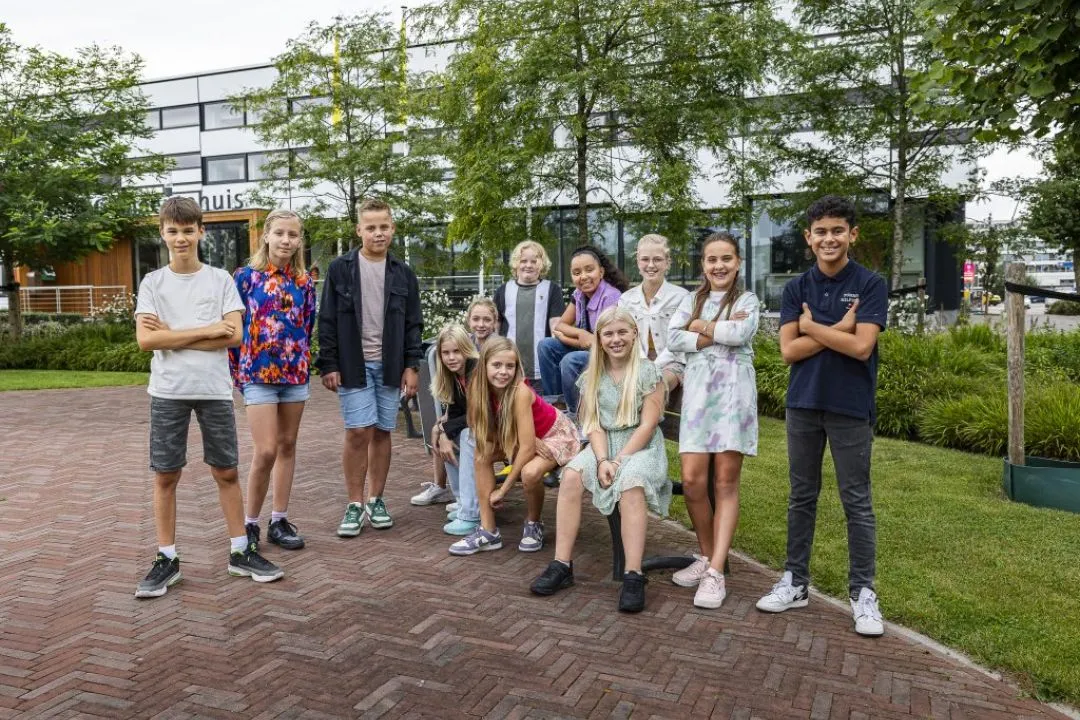
The South Holland city of Waddinxveen is the fastest-growing city in the Netherlands and today counts nearly 35,000 residents. 30% of them are under 25, and by 2050 that share will reach 40%. This demographic trend raised a pressing question for the city: how do you involve even the youngest residents in decisions about the future? Esther van Ellinkhuizen, staff member for cabinet affairs and child participation, explains how she does it.
%2520copy.webp)

In Rijswijk, a municipality of around 57,000 residents in South Holland, lies a place with a remarkable history. At Hof van Sion, archaeologists discovered the remains of a monastery dating back to the 15th and 16th centuries. Today, Hof van Sion is part of RijswijkBuiten, a sustainable new neighborhood. When the municipality decided to create a new community meeting place there, it asked residents what they wanted to see. They shared their ideas online using an interactive map.
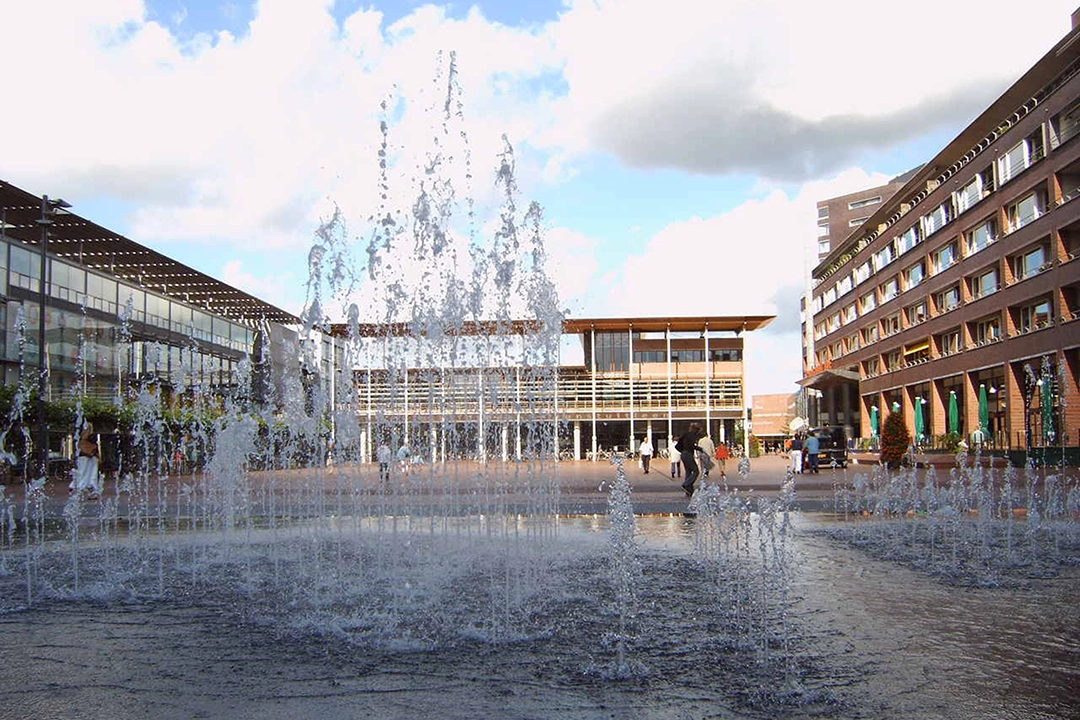
Located just outside Amsterdam, Amstelveen is working with residents to create a greener, more welcoming, and more inclusive city. Through its online participation platform, residents can help shape long-term plans for the city, contribute to the design of new neighborhoods, and share ideas for smaller improvements that can make a visible difference in everyday life.