
The South Holland city of Waddinxveen is the fastest-growing city in the Netherlands and today counts nearly 35,000 residents. 30% of them are under 25, and by 2050 that share will reach 40%. This demographic trend raised a pressing question for the city: how do you involve even the youngest residents in decisions about the future? Esther van Ellinkhuizen, staff member for cabinet affairs and child participation, explains how she does it.
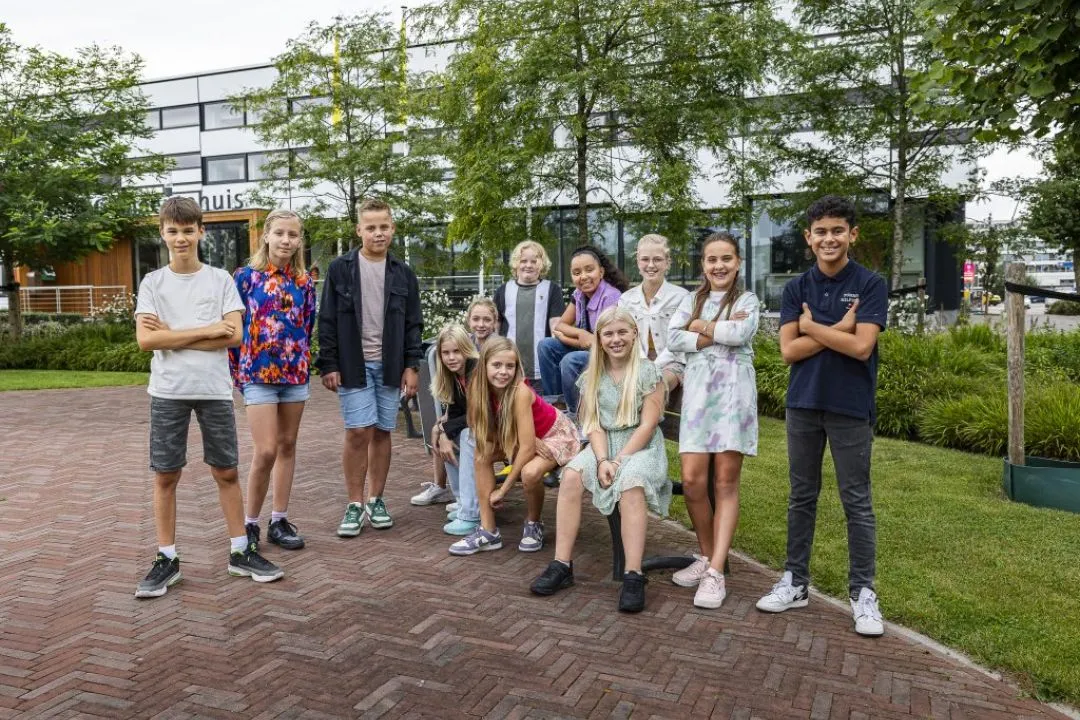
Every primary school in Waddinxveen is represented on the children’s committee.
A manageable schedule makes participation easier to combine with school and other activities.
A survey found broad support among residents for establishing a formal children’s council.
When Esther started working for the city, child participation barely registered. There was a child mayor, already the fourth one, but the role was mostly ceremonial.
Esther saw potential for more: "It was a fragile setup. A child mayor commits to a specific goal or project, and you can't put the pressure on one child to weigh in on all of our policy. Plus, there's no backup if that child happens to be sick or on vacation."
Her plan? Gradually evolve from symbolic participation to participation with more impact. "The idea is to work step by step toward a system where children weigh in on different policy topics," Esther explains. "That's why I set up a children's committee in 2023, to involve more children up to age 12 in more topics. Meanwhile, I'm also looking into whether we can install a real children's council in Waddinxveen."
For that research, Esther launched a survey on the city's Go Vocal participation platform. It found that nearly two out of three residents thought it was a good idea. Esther: "The survey also included an open question where residents could share their wishes, ideas, and comments on this topic." Thanks to the AI analysis tool, the city of Waddinxveen could automatically summarize these open answers. From there, it was easy to share the results through the Report Builder on the platform.
The children's committee plays a varied role. The children weigh in on different topics and give advice. They also help out at events.
Esther's colleagues are lining up to consult the committee: "Six children took part in the first year. Now the committee has twelve enthusiastic young residents of Waddinxveen, with every elementary school represented. That makes it a hugely interesting group for colleagues to tap into."
Concrete examples of topics the children's committee weighed in on include the new safety policy combined with making traffic safer, and the construction of a new swimming pool.
"As the fastest-growing city in the Netherlands, we want to be well-prepared for the future," Esther continues. "That's why we launched the project 'Think along about Waddinxveen in 2050.' For that too, we asked the children for their vision of Waddinxveen's future. For example, they shared their opinion on housing development, what that development means for playgrounds, and more."
Children love sharing their opinion, and they really enjoy making a difference, being able to say, "we did that!"
- Esther van Ellinkhuizen
But how do you decide what to bring to the children? And how do you make sure it doesn't become too much or too difficult? Esther: "During one of the first meetings, the children indicate which topics they want to weigh in on, and that's my guide. If a colleague wants to consult them on a theme or project, it needs to align with what the children indicated. And if I know certain initiatives are coming up, I can use that list to encourage colleagues to bring in the children's committee."
Because of GDPR (the EU's General Data Protection Regulation), Esther can't simply involve the children on the committee, or beyond it, through the city's participation platform. As an alternative, she focuses on parents and grandparents instead.
Esther: "We ask them to discuss the topics with the children and then, together, fill in an online survey, for example." Those restrictions don't apply to young people aged 16 and up. So you can involve them through the platform directly, and that works well. Esther's colleagues, for example, launched a project for building new hangout spots for young people.
To keep growing enthusiasm for the children's committee and child participation, Esther focuses on three specific things:
Esther visits every elementary school in Waddinxveen and stops by classrooms with the oldest students. There, she explains why participation matters, how it works, and how children can sign up.
"Those school visits are crucial," Esther stresses. "Not just for informing the children, but also for building relationships with schools and teachers."
Communicate about successes too, Esther stresses: "Show what children's input actually delivers. That motivates both the children and the adults within the city."
Second, she's clear about the time commitment involved. The committee meets four to six times a year, a schedule that fits easily around school and hobbies. "Transparency matters," Esther says. "Joining in can feel intimidating, but once children know it won't become too big a burden, they get enthusiastic anyway."
Finally, Esther makes efficient use of the resources available. With an annual budget of €10,000, she has to be creative. Part of that money always goes toward communication materials and media training for the child mayor and committee members.
The rest can then go toward projects the children choose themselves. "We put up lights on roundabouts, for example," Esther says. "That was the children's own idea, aimed at traffic safety." A really valuable tip: work together with other departments and other partners within the city, in this case, the police.
Esther stresses that every city needs to choose its own approach. What works in Waddinxveen might not fit the context of another city. "It's about finding a format that matches the size of your city. In Alphen aan den Rijn, my previous employer, there are more than 50 elementary schools. That's too many to have a child from every school join a children's council," she explains. "There, the arrangement is that children from one half of the schools can sign up for the council one year, and the other half the following year."
Political and administrative support are crucial too. In Waddinxveen, both officials and administrators are convinced of the benefits, so investments in child participation are never questioned. "That support creates room for growth and innovation," Esther explains. "It allows us to make a real difference."
The success of the children's committee is slowly creating a domino effect too: it's now inspiring the city to take a more targeted approach to participation among teens and young adults. "Youth participation needs a different approach than participation for adults," Esther says.
"You can't involve young people with the same formal, rigid processes. Flexibility is crucial."
Esther also sees her role informally expanding into that of an expert and internal advisor. "I notice colleagues coming to me for advice more and more often," she says proudly. "The number of phone calls and people stopping by for tips keeps growing steadily. That shows that awareness of the importance of child and youth participation is really growing within our city."
Strong for the future
Waddinxveen shows that meaningful child participation isn't just possible, it also delivers valuable results. By taking children seriously as conversation partners and policy advisors, the city isn't just creating better policy, it's also growing a new generation of engaged residents.
"What also moves me deeply, and what I think is important to highlight," Esther concludes, "is seeing the positive impact all of this has on the children who take part. The friendships they build, and how they grow into their role. They develop skills and insights that will stay with them for life."
With this approach, Waddinxveen positions itself as a city ready for tomorrow's challenges, with the voice of its youngest residents firmly anchored in its policy.
Curious how Go Vocal can help take your own participation projects to the next level? Book a conversation with our experts today to discover what our platform can do.


Sören is a fervent tech enthusiast with a profound interest in politics and democratic innovation.He aims to share stories that inspire and drive impactful community engagement.
Sören Fillet is Go-to-Market Lead at Go Vocal and holds a master’s degree in public sector communications.
With 5+ years of experience in GovTech, Sören has developed a nuanced perspective on the challenges and best practices in democratic participation. He actively collaborates with experts in the field to organize industry events and stay at the forefront of trends and innovation.
In addition, Sören obtained a certificate from Innovation in Politics, further solidifying his expertise in innovative governance.

The South Holland city of Waddinxveen is the fastest-growing city in the Netherlands and today counts nearly 35,000 residents. 30% of them are under 25, and by 2050 that share will reach 40%. This demographic trend raised a pressing question for the city: how do you involve even the youngest residents in decisions about the future? Esther van Ellinkhuizen, staff member for cabinet affairs and child participation, explains how she does it.
%2520copy.webp)

In Rijswijk, a municipality of around 57,000 residents in South Holland, lies a place with a remarkable history. At Hof van Sion, archaeologists discovered the remains of a monastery dating back to the 15th and 16th centuries. Today, Hof van Sion is part of RijswijkBuiten, a sustainable new neighborhood. When the municipality decided to create a new community meeting place there, it asked residents what they wanted to see. They shared their ideas online using an interactive map.
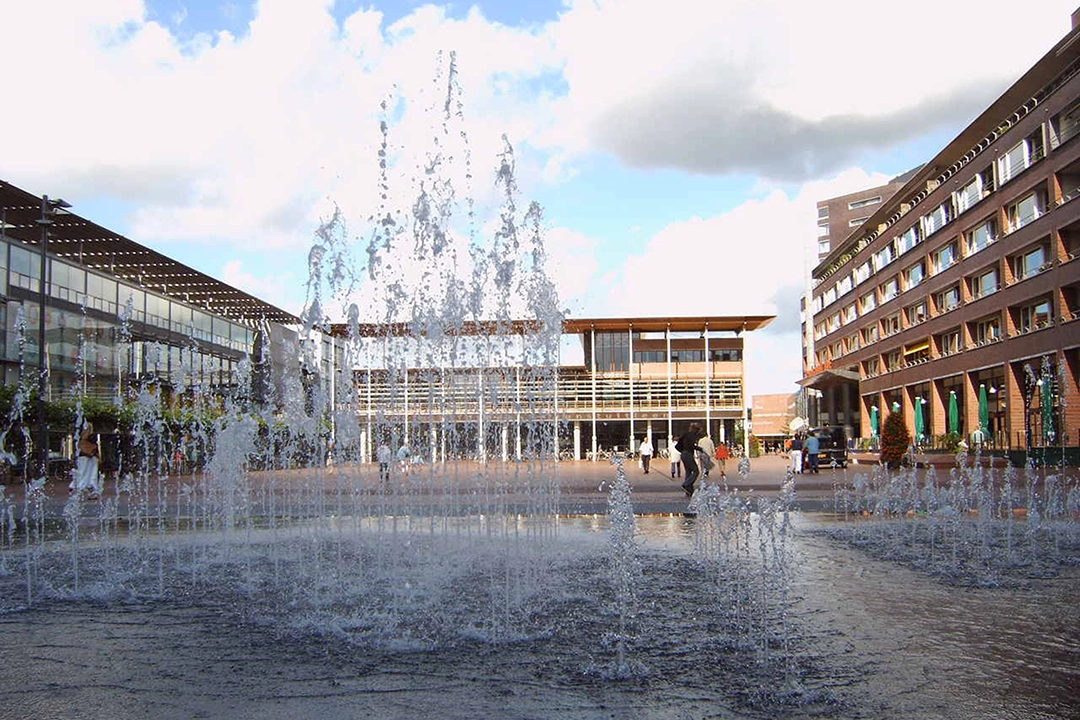
Located just outside Amsterdam, Amstelveen is working with residents to create a greener, more welcoming, and more inclusive city. Through its online participation platform, residents can help shape long-term plans for the city, contribute to the design of new neighborhoods, and share ideas for smaller improvements that can make a visible difference in everyday life.