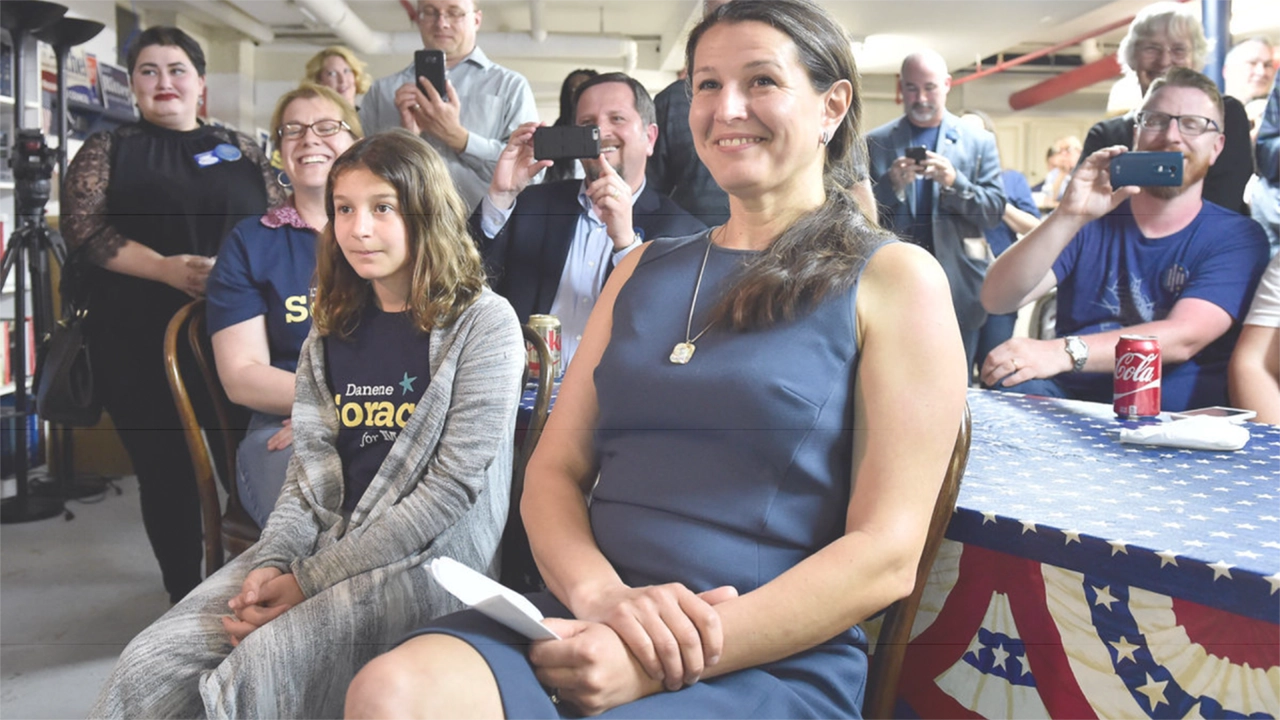


A recap of "The Local Authority" podcast, recorded live at New Local's Stronger Things 2026, featuring Go Vocal CEO and co-founder Wietse Van Ransbeeck.
"All too often, our participatory processes taste like cardboard, dry, bureaucratic, very chewy. It should be more like honey: sweet, delicious, sticky."
Wietse Van Ransbeeck, on what makes residents actually come back to take part again
The May 2026 local elections reshaped the political landscape across England. With communities in more than 100 constituencies going to the polls, the results delivered a strikingly fragmented picture: real breakthroughs for Reform UK at one end, gains for the Greens at the other, and a sharp rise in the number of authorities with no single party in overall control.
Whatever a resident's political views, the people sitting around council tables look different almost everywhere now. That was the backdrop for a live recording of the Local Government Chronicle's podcast, "The Local Authority," at New Local's Stronger Things conference in London's Guildhall, where Go Vocal CEO Wietse Van Ransbeeck joined the panel to make a case that runs through the whole discussion: a fractured political map doesn't excuse councils from investing in resident participation. It makes that investment a strategic necessity, not an administrative afterthought.
Wietse was joined by Martin George (acting editor, Local Government Chronicle, who chaired), John Denham (director, Centre for English Identity and Politics, University of Southampton, and former UK Communities Secretary), and Grace Pollard (head of policy and insights, New Local).
Earning agency: what really drives trust
In times of political uncertainty, how do new administrations earn public confidence? According to Wietse, the answer isn't found in who won the election. It's in how councils engage residents between votes.
Citing recent OECD research on what drives trust in public institutions, which polled nearly 60,000 people across 30 countries, he pointed out that trust isn't primarily driven by socioeconomic status, education, or party alignment. The single biggest driver is whether people feel they have a genuine say in government decisions:
- 22% of people who feel they cannot influence decisions trust their government.
- That number jumps to 69% among people who feel they have agency and are being listened to.
The figures track the OECD's Survey on Drivers of Trust in Public Institutions. Standard statutory consultations and tick-the-box surveys rarely deliver that sense of agency, which is exactly why residents tune out.
From cardboard to honey: three practical shifts for councils
Wietse brought his argument to life with a metaphor borrowed from the designer of New York City's participatory budgeting programme, used to make sure his point would stick: how does it taste?
"All too often, our participatory processes, they taste like cardboard, dry, bureaucratic, very chewy. And it should be more like honey, sweet, delicious, sticky. People coming back because they know they can have an influence. They can change things. They're getting heard and they get feedback."
After years working with 750+ governments through all kinds of political dynamics, Wietse shared three practical shifts worth stealing:
- Move beyond surveys to ongoing, multichannel dialogue. Town hall meetings miss working parents and busy carers; online channels need to sit alongside in-person ones so residents who can't make an evening meeting can still contribute.
- Close the feedback loop every time. Show people what their input actually changed, even when the outcome wasn't what everyone wanted.
- Elevate lived experience in storytelling. Move beyond "we had 5,000 participants" to stories of how lived experience shaped a real decision.
Case in point: London Borough of Newham. The "People Power Places" programme, now in its third two-year cycle, has brought close to 50,000 residents into neighbourhood-level, citizen-led projects. 89% of participants reported feeling more strongly connected to their neighbourhood afterwards.
Pushed further on what actually builds trust in new councillors, Wietse's answer was structural rather than sentimental:
"Community empowerment and engagement shouldn't just sit somewhere in a two, three person team. It should be embedded all over the organisation."
Community empowerment fails when it's run as a string of short-term funded projects instead of built into how a council works day to day: buy-in from decision-makers so engagement insight reaches policy, and staff given the skills to bring residents in as new projects launch.
Navigating coalition dynamics and political friction
A fractured vote brings distinct operational challenges. Denham and Pollard's contributions both support the same underlying point:
- Separate policy from duty. New coalitions bring policy changes, but legal duties and administrative responsibilities endure regardless of who's in charge. Clear boundaries help officers support incoming decision-makers without confusion about what's actually negotiable.
- Community power sits beyond party lines. As Pollard put it, community-powered reform "is not necessarily a political project that belongs to any one political party." Relational, place-based service design remains the underlying current regardless of who holds office.
- Coalitions as an opening, not just a risk. No-overall-control councils push leaders out of top-down, "ivory tower" policymaking. Bringing the public in creates a shared baseline of community intelligence, giving multi-party coalitions the backing they need to make hard trade-offs and budget decisions, and a way to explain and justify those choices.
Behind the scenes: staff morale under political change. One audience member asked how to support officers who are personally affiliated with a party that's just lost power. It's a live research question, not just a panel aside: a King's College London study by Dr Barbara Piotrowska found civil servants report lower job satisfaction and motivation when their political alignment diverges from the government in power (KCL). A recent Dutch study of civil servants working under PVV ministers reached a similar conclusion from the other direction: officials felt less loyalty toward political appointees, even without feeling personally distrusted by the new administration (Nederlands Dagblad).
A reality check on systemic reform
- Some on the panel called for electoral reform, while others pointed out that a different voting system is no guarantee it fixes the underlying trust problem.
- Go Vocal's own experience across markets backs that second view: trust breaks down just as easily in countries with different electoral systems the moment community engagement gets reduced to elections and tick-the-box surveys.
- The lever isn't the mechanics of the ballot. It's whether engagement is meaningful enough to move the needle on trust at all.
The takeaway for local leaders
A more fractured electoral map makes community engagement more critical, not less. New administrations without a long-standing governing track record rely on resident patience, and residents only extend that patience to institutions they trust. As Wietse put it, that trust isn't abstract: it's earned every time a resident sees their voice shape a decision, and lost whenever engagement stops at a survey nobody hears back from.
Related reads
- Blog: Key approaches to strengthening the public's trust in government
- Guide: Scaling participation internally: a guide to council-wide engagement
- Webinar: Beyond the checkbox: making engagement more effective and impactful
- Case study: Lessons learned from Newham's flagship participatory budget programme



.jpg)