

Fraser is the Government Success Manager for the UK at Go Vocal.
Other posts


Fraser is the Government Success Manager for the UK at Go Vocal.


We don’t believe consultation and engagement are the root cause of unnecessary delay in the planning process, but times are changing and so is the legislation. The government is pushing for faster, leaner and better consultation in order to get Britain moving and that is underpinned by the new national planning policy framework (NPPF).
The changes don’t necessarily mean participation has been watered down. There are now three consultations, three gateway checks, all inside 30 months, roughly half the old timeframe. But the stakes are higher. There is no room for error, and planning authorities will need to work at optimum efficiency.
The fundamental plan-making principle is to “Engage positively with communities and other key stakeholders, at appropriate points during their preparation and using a range of methods, so that relevant issues are identified and addressed as early as possible during the plan-making process”. There is even a mandate to use digital tools in order to publish plans in a searchable format and to ensure plans are easily navigable and accessible to different users.
The requirement to “engage positively” is open to interpretation but, in our view, massively understated in terms of historic planning consultations. Going through the motions is no longer a valid approach. Making the experience meaningful, engaging and impactful can change the dynamic. Trust and legitimacy must be preserved. They can no longer be held back by technology designed around council workflows rather than the people taking part. And that’s one of the main reasons why we have witnessed the rapid uptake of Go Vocal by planning authorities: the interface is designed for residents, so taking part feels easy again.
A departure from single methods and channels is an opportunity to branch out but can also make the job more difficult. We appreciate that data integrity and a single source of truth are required to overcome fragmentation and act as the building blocks for reusable insights. Which brings us to our second reason why Go Vocal is so popular: it is an avenue to rapid and actionable insights beyond the lifecycle of a single project or activity. A glue that sticks together past and present conversations.
In short, local authorities may initially seek digital efficiencies such as enhanced sensemaking and reporting but come to realise that the new framework is actually hinting at a statutory reporting duty. That is the equivalent of a new and more continual engagement approach from the outset. The Statement of Community Consultation (SoCC) is history so a well-defined community engagement strategy is more important than ever (we have a tool called Compass for developing that too!).
Here are ten capabilities of the Go Vocal platform which tackle the new framework head-on, many of which were designed specifically for planners and the planning process.
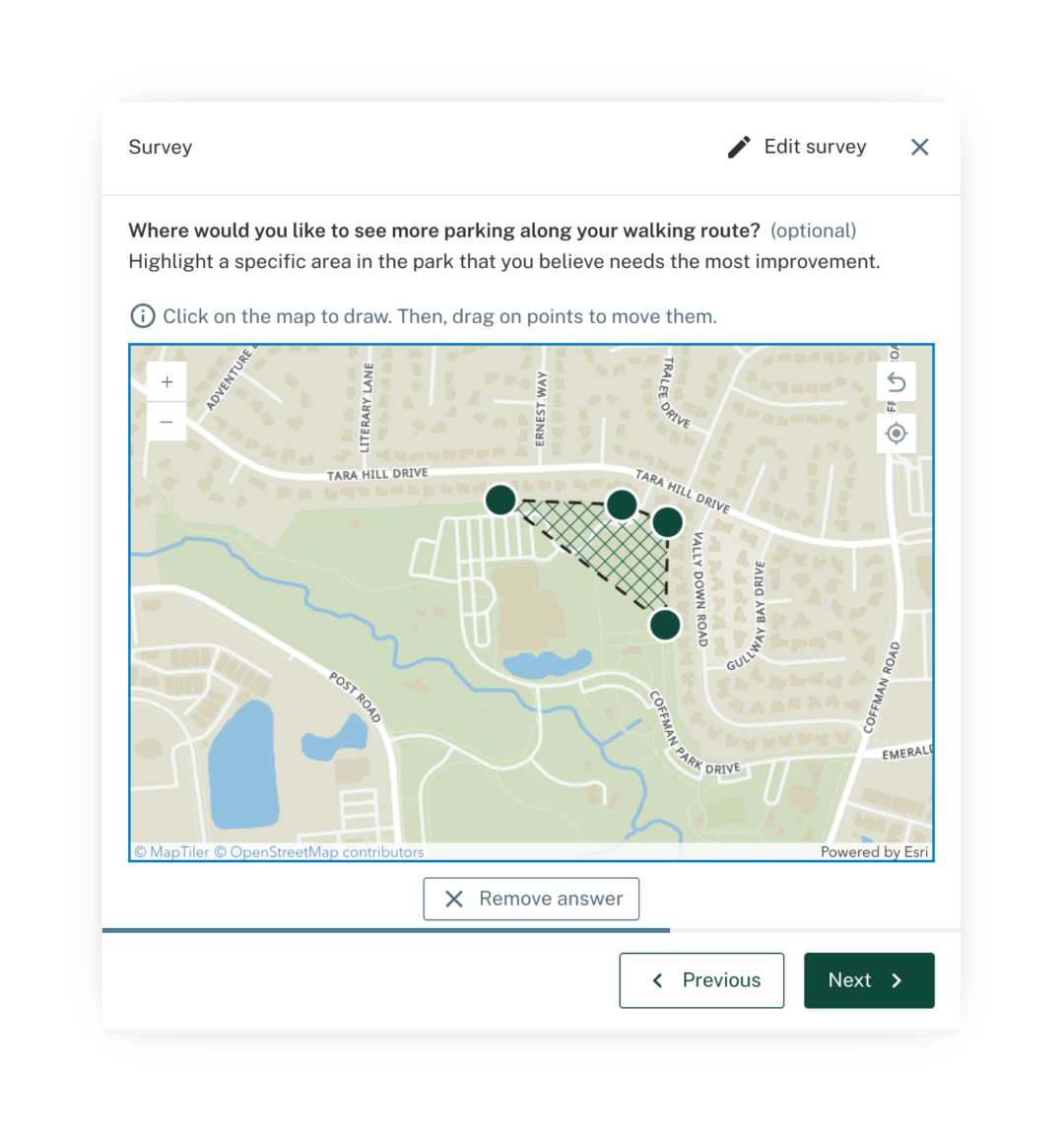
Every Go Vocal project can be targeted to a geographic area and platforms have ready-to-go, advanced geospatial capabilities. For example, drop a pin, draw a route, draw a polygon or allow your stakeholders to send you Esri shapefiles. Versatility you control, such as changing the basemap and adding map layers including live Esri feature layers or Esri maps. Perfect for a “call for sites”.
Go Vocal consultations are built around multiple phases on a timeline so it’s easy to keep track of multi-stage projects. The results from prior phases can be automatically collected and posted in the next. Conversations can flow along the timeline, stakeholders can get notified of progress and scheduling is automated. The combination of historic stages and alerts can be used for notices whilst draft phases can be used to prep in advance.
The admin interface is built for speed but not at the expense of creativity. Reusable templates speed up deployment, admin workflows keep the projects moving forward and a drag-and-drop content builder means that anybody can intuitively strike up a consultation. The participant experience is also optimised: a full interaction history is held in a secure profile and participant notifications are based on their own interests and preferences.
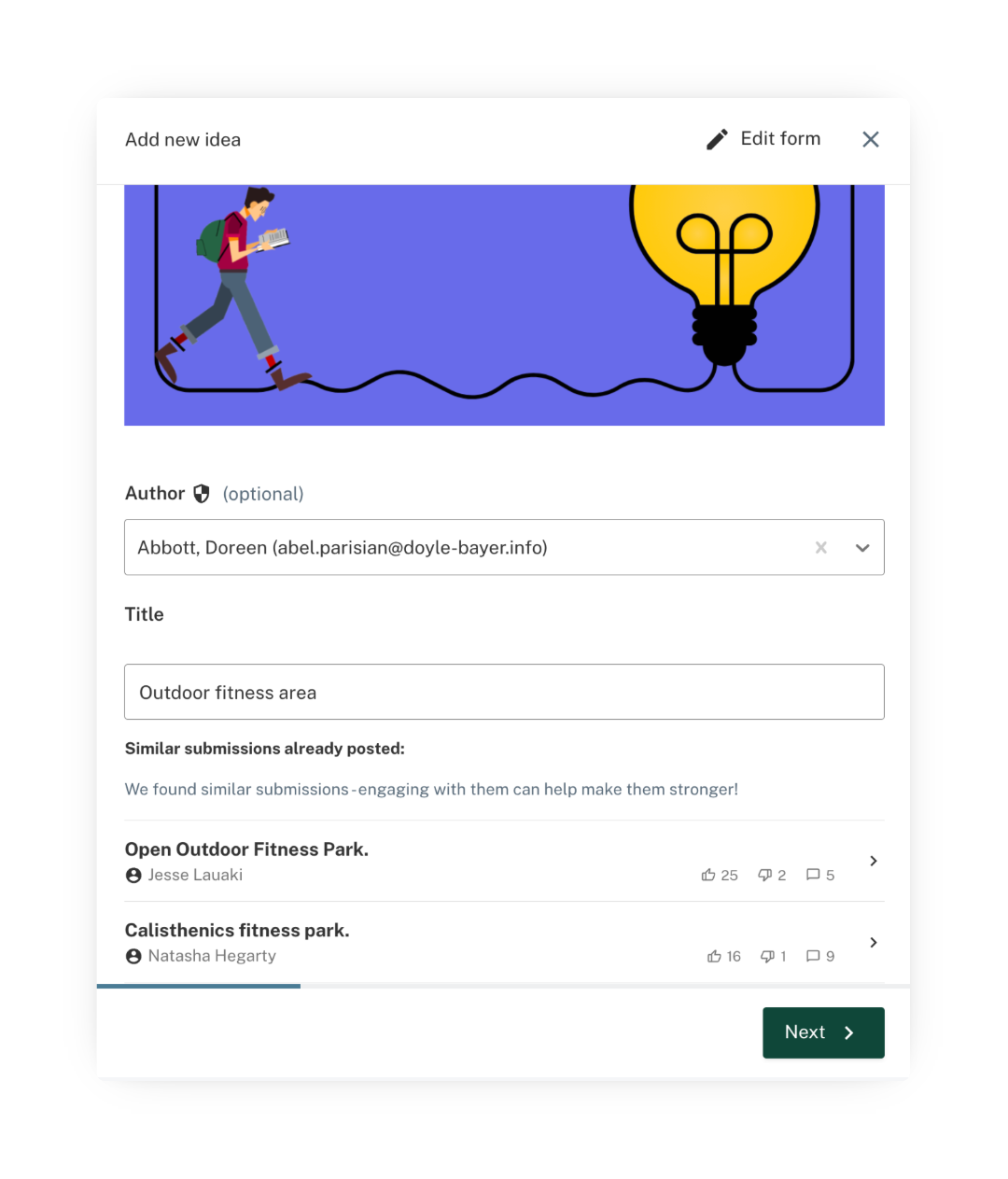
Strengthen legitimacy and go beyond surveys with a variety of interactive, engaging methods. For example, ECHO records in-person conversations and workshops and transcribes them; ideation allows you to collect stakeholder priorities and preferences to help with the development of options or to surface issues during the implementation stages of a project.
The risk of moving at pace is that mistakes can creep in and undo any progress. The combination of an approver workflow, drafting and draft sharing mean that you can maintain oversight and work in a controlled environment. Moreover, the ability to deploy standardised equalities monitoring questions at the click of a button will help you keep compliance in check.
It’s simple to close the loop with customisable reports that can be published straight back to the participants for each stage. Advanced reporting allows you to redact personal data and planning officers get spatial data in the format their GIS team already uses, rather than 400 comments saying “the field behind the church”. What’s more, data from multiple projects can be drawn into one report.
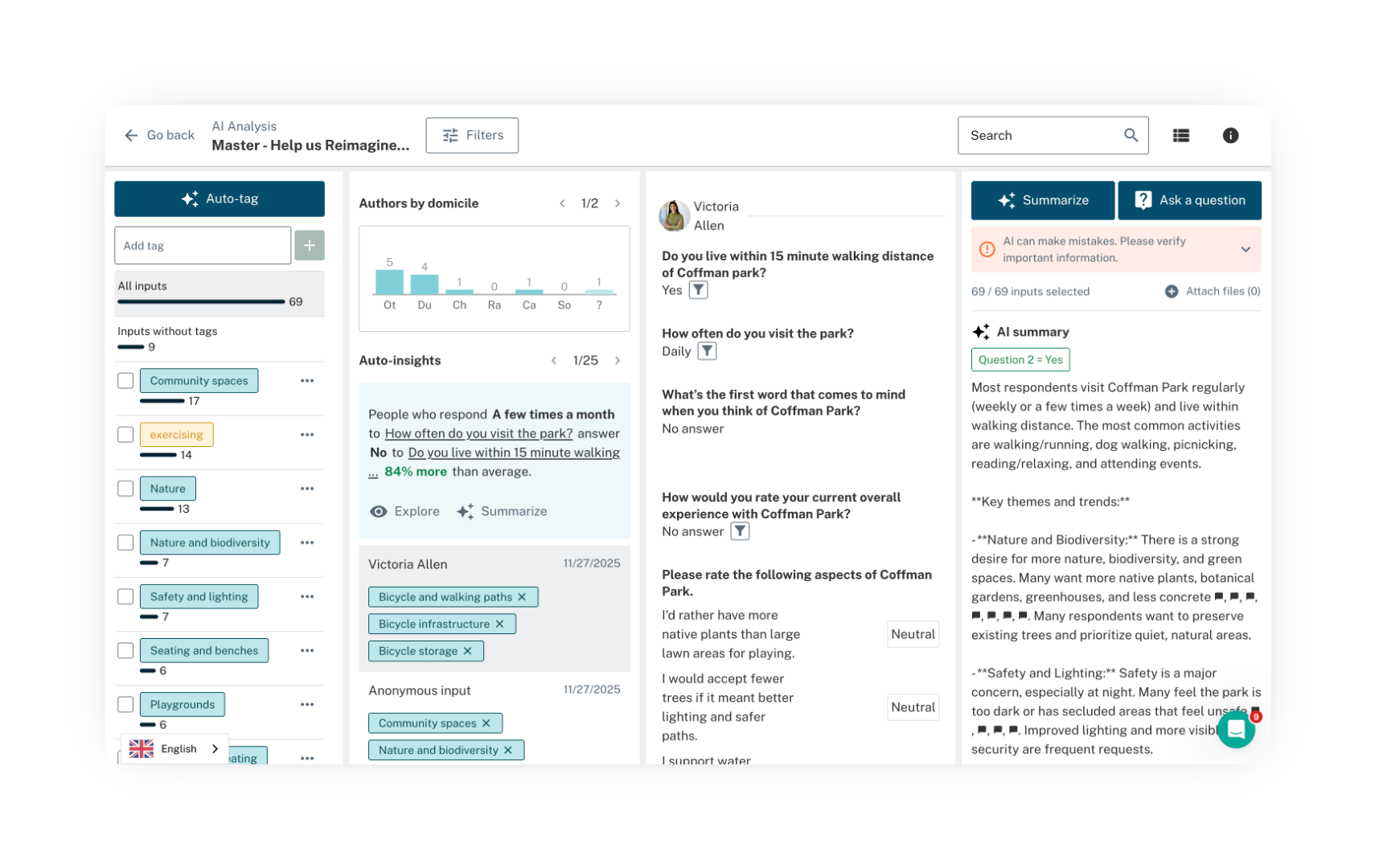
Dig deep into conflict and consensus of unstructured feedback using AI summarisation. AI-enabled optical character recognition also means that you can quickly understand what’s being said from paper surveys and street interviews. The 360 file library pulls handwritten, audio, video, PDF and image material into one analysable repository.
The best way to avoid mistakes is for on-the-fly correction. A representativeness dashboard compares participants against census profiles and flags participation gaps and a dedicated Government Success Manager is provided to help you drive your success plan and provide advice about project design or improving performance.
We realise the planning process is not isolated, which is why your data can interface with other platforms such as Power BI. Get your data out with full reports in Excel at any time, plus a secure data API to move evidence into your other systems.
We do more than deliver a service. The community is active. Every month there are best practice sessions, founders who talk with clients, a product team that makes improvements every day and reacts to your feedback, a product that is expanding with every conversation. We’re ready to adapt and evolve as the guidance is refined.
Book a demo to see how Go Vocal can support your council through each stage of the new plan-making process.
Fraser is the Government Success Manager for the UK at Go Vocal.
Fraser is the Government Success Manager for the UK at Go Vocal.


.jpg)