







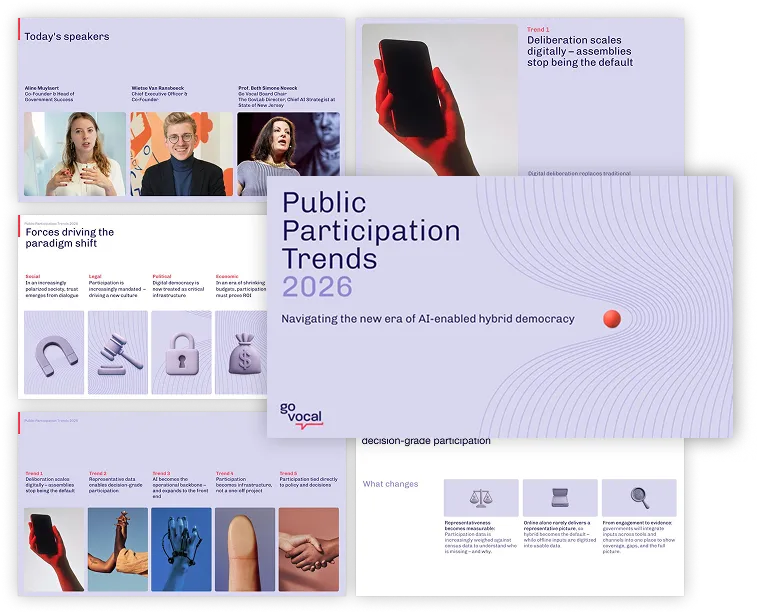
Forces driving the paradigm shift

Participatory democracy is entering a transformative phase. As we look ahead to 2026, digital and hybrid deliberation have moved from experimental "nice-to-haves" to essential government functions.
For local government leaders and policy teams, the central question has shifted: it’s no longer about whether to engage, but how to scale digital public participation effectively and inclusively.
This shift is driven by a powerful convergence of new insights, tools and best practices.
Digital deliberation is becoming the standard, AI is reducing operational friction, and multi-channel engagement, combining online and offline voices into a single evidence base, is now the baseline expectation for any credible process.
To navigate this new reality, we must first understand the PESTEL forces (Political, Economic, Social, Technological, Environmental, and Legal) that are redefining the participation ecosystem and creating new insights, tools, and best practices.
SOCIAL
In an increasingly polarised society, trust emerges from dialogue
- Trust in institutions continues to decline – and with it, people’s willingness to engage through “official” channels. However, the data shows that trust emerges from dialogue.
- The Mamdani effect. A new style of political leadership is gaining ground: leaders elected on the promise of listening (e.g., Mamdani in NYC as a visible signal of the shift).
- Social media won't be that trusted space for healthy debate. Falling participation and legitimacy on platforms like X/Facebook for democratic debate opens the door to create constructive spaces for dialogue to rebuild trust.
The facts
- Polarisation has just emerged as the 3rd Global risk in the short term (WEF, 2026).
- Trust & participation: The OECD finds that only 22% of residents trust their local govs when they don’t feel listened to, jumping to 69% when they feel they can influence decisions.
What it means for you
- Scale deliberation beyond the town hall. Deliberation is one of the few tools that can reduce polarisation, but it hasn’t scaled in traditional assembly formats. Hybrid is the path to scale.
Go Vocal makes it easier to connect broad public input with smaller group discussions and show how each piece informs the bigger picture.
You can gather ideas from hundreds of residents, online or on paper, then bring small, diverse groups together to dive deeper.
Once ideas are shaped, you can put them back out to the wider community for feedback or a vote. The platform links each step in one visible, transparent process.
Easy for residents to get involved. For staff to manage engagement processes. And for policy makers to make informed decisions.
- Treat the “public space” vacuum as a strategic opening. People are looking for legitimate, constructive spaces for dialogue. If you create them, you can rebuild trust – one credible interaction at a time.
- Redefine leadership as “listening at scale.” The 21st-century skillset is clear: leverage tech to listen, use participation tools and data to sharpen understanding, and personalise dialogue with community members (see Rewiring Democracy).
Legal
Participation is becoming
mandatory – driving a new culture
- Participation is no longer optional in many countries: new rules increasingly require governments to engage residents early and continuously, especially in planning decisions.
- This is driving two parallel outcomes:
- Faster adoption of participation practices and digitalisation.
- Higher risk of “check-the box” engagement when participation becomes a compliance requirement rather than a political choice.
- The net effect: more participation activity on paper, without guaranteed legitimacy in practice.
The facts
- Regulation wave: Growing list of participation requirements across countries.
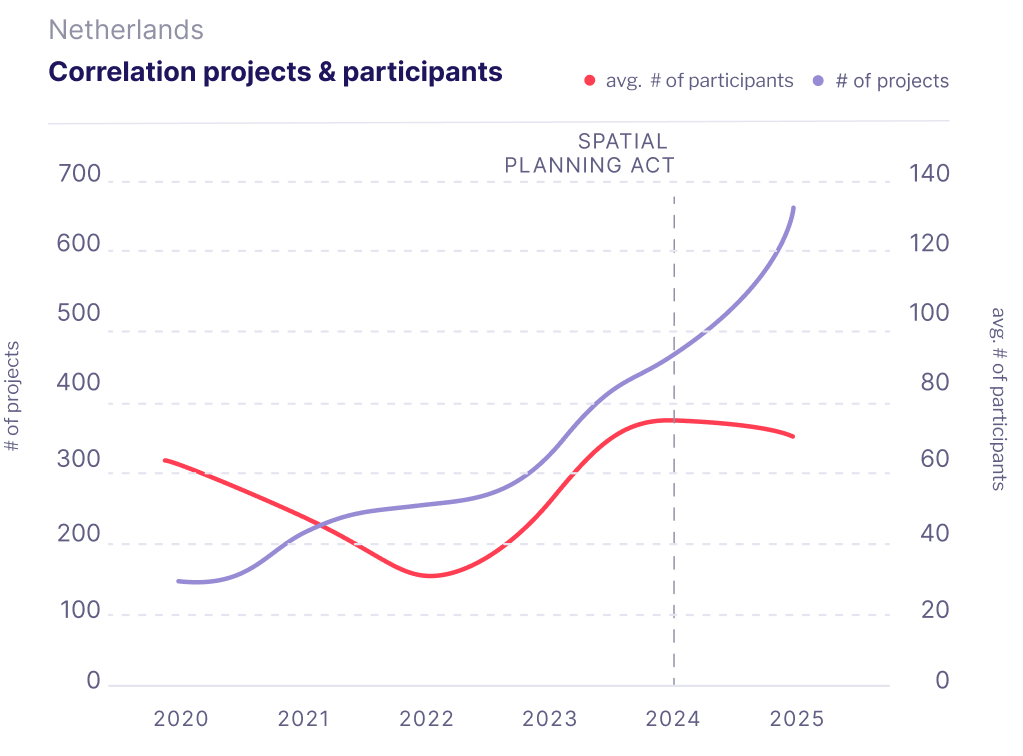
- Netherlands zoom-in: Omgevingswet (spatial planning act, 2024) + Participatieverordening (2027).
- Signal from practice: In the Netherlands, rising numbers of participation projects don’t automatically translate into higher overall participation.
What it means for you
- Regulation is the primary accelerator for participatory governance – it will expand demand, budgets, and expectations.
- Compliance won’t buy legitimacy. If participation feels procedural, people disengage. You still need a compelling public case: real tensions, visible trade-offs, and clear “what changes because of input.”
- Design for relevance to avoid participation fatigue. Personalise who you invite, what you ask, and when you ask it – and make the experience feel worth residents’ time, not like another form to fill.
With Go Vocal, participation feels more personal and less like a dead end.
For instance, residents can discover projects that matter to them, based on their neighbourhood or interests. When there’s a response from the council, they get automatically notified.
Surveys save progress automatically, so if someone gets interrupted, they can easily pick up where they left off.
These small touches help reduce fatigue and build trust that their voice counts.
Political
Digital democracy is finally considered critical infrastructure
- Participatory democracy is being reframed as critical infrastructure. A rising regulatory focus on disinformation, interference, and democratic resilience, is fundamentally changing how participation is governed.
- Participation platforms are increasingly treated as vulnerable systems, not “just tools.” They’re moving into the same risk category as e-voting, public registers, and other civic infrastructure.
- Digital sovereignty is now a procurement requirement, not a political slogan. With reversed globalism, local authorities are tightening expectations on local data hosting, jurisdictional control, and local vendors (especially in Canada and Europe).
The facts
- Policy signal: The UK's "Defending Democracy" framework elevates participatory tools from "civic tech" to "critical national infrastructure". This approach is supported by the National Security Act 2023, which legally protects the integrity of the democratic process, including digital platforms, as a national security interest. Further developments include the Defending Democracy Taskforce treating disinformation as an active hybrid threat and new guidelines emphasizing "sovereign-first" procurement for government technology.
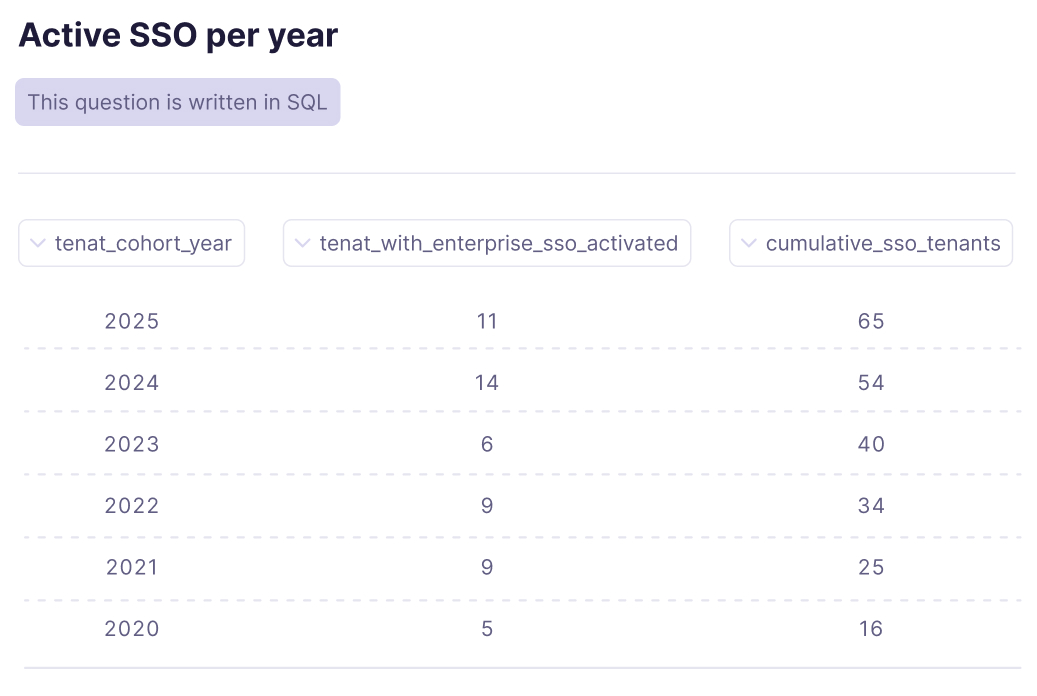
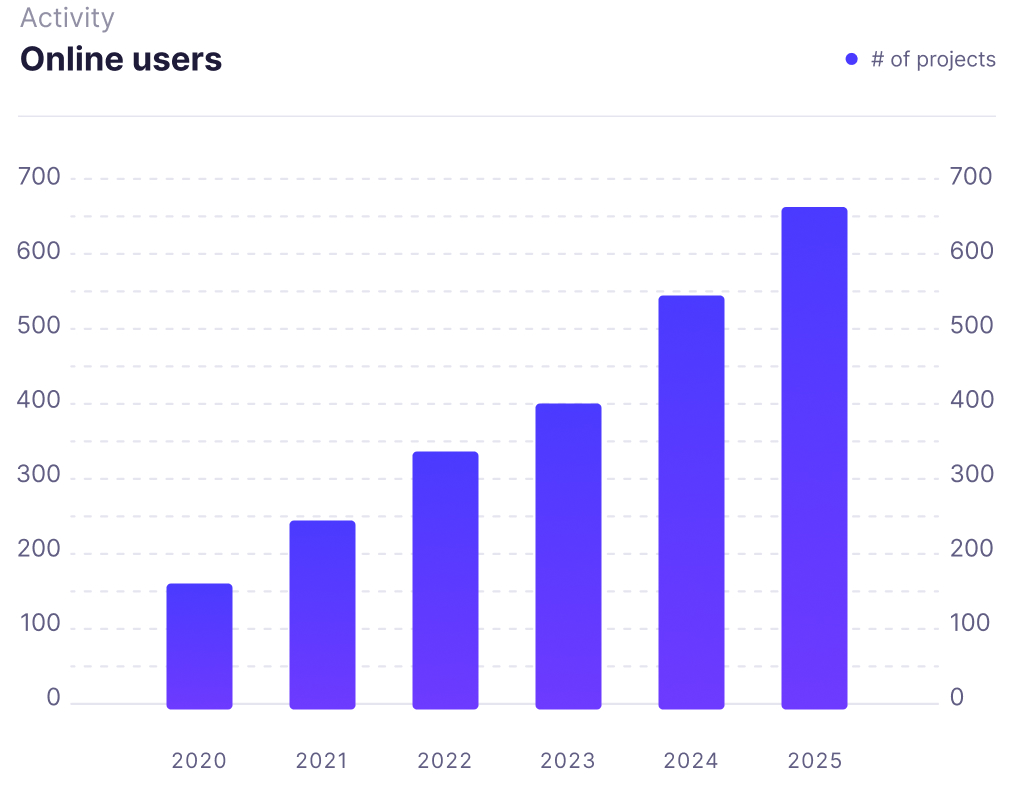
- Platform signal: Our data shows an 300% increase in the share of governments enabling SSO / eID since 2020 – a clear indicator that participation is being pulled into enterprise-grade identity and access standards.
Steady increase in the adoption of official SSO verification over the years, with 2024 having the highest number of governments activating identity verification mechanisms.
What it means for you
- Expect a higher bar for integrity, auditability, and control. SSO, eID, archiving, retention policies, role-based permissions, and traceable decision trails move from “nice” to “non-negotiable.”
- Security posture becomes part of democratic legitimacy. If community members doubt the system’s integrity – or officials can’t defend it – trust collapses before the process even starts.
- Sovereignty will shape vendor selection. Where data lives, who can access it, and under which laws it operates will increasingly determine what’s deployable.
At Go Vocal, we recognise that trust has two sides. Residents need to feel safe sharing their views. Local authorities and other governmental organisations need to know the feedback they receive is real.
Our platform is built for confidence on both sides of the table.
For residents, we provide a secure environment where privacy is paramount, backed by vetted AI partners and strict data compliance.
For governments, we offer tools like verified participation that guarantee authenticity.
Economic
In an era of shrinking budgets, participation must prove ROI
- Austerity is tightening the screws: budgets are being cut while spending grows in other areas like security & defense, often at the expense of social priorities.
- Government teams are under pressure to prove ROI, reduce operational friction, and deliver more outcomes with fewer resources.
- The result: participation is moving from “good practice” to “performance conversation.”
The facts
- Efficiency gains: Digital engagement is 75% more efficient than offline methods alone. On average, Go Vocal costs just £ 2–2.5 per engaged resident for a local authority with a population of 50,000 community members after one year
- Budget reality: Councils are facing a "debt pile totalling £122bn", leading to "drastic cuts" that jeopardise ambitious local policies.
What it means for you
- Digitalisation becomes a cost strategy. Build repeatable, low-friction participation processes that reduce staff time, shorten cycles, and standardise delivery.
- Participation needs an economic case, not just a moral one. Define the ROI in terms leadership recognises: cost avoided, time saved, risk reduced, smoother delivery.
- Trust is the multiplier. If trust is the currency that buys everything else, you need proof points that translate trust-building into delivery outcomes – credible enough to win councils and executive leadership.
Technology
AI finally reaches adoption in government
- AI sentiment has shifted fast: from cautious skepticism to day-to-day use at scale.
- Adoption is accelerating across public administrations, especially for back-office work: summarisation, moderation support, clustering, and analysis in participation.
- Pervasive data unification. AI is being used to connect offline formats (via speech-to-text/OCR) with digital participation, consolidating all input into a single data hub.
The facts
- Go Vocal Sensemaking: 1,200+ analyses per month.
What it means for you
- AI becomes the operational backbone for hybrid democracy – not a bolt-on feature.
- The question is no longer “AI or not,” it’s “which principles”: human accountability, traceability, verifiability, and governance.
- Leaders will demand systems that can explain how outputs were produced and who is responsible – especially in politically sensitive contexts.


.svg)