

Participation without policy is a microphone nobody plugged in
Governments have become very good at engaging residents. Yet much of that participation never reaches the decisions leaders care about most. So how can policy and participation reinforce each other?

This summer I went from city hall to city hall, in the US, Canada, the UK and across Europe. I sat down with mayors, directors and engagement teams to hear how they plan their projects, involve residents and show what they've delivered.
One thing came up in almost every conversation: governments have made real progress in how they engage residents. They have better tools, more channels and more people taking part than ever... Yet much of that participation never reaches the decisions leaders care about most.
Here's the uncomfortable part: for political leaders, engagement was never the goal. They were elected to deliver a plan. Participation becomes valuable to them when it helps them deliver that plan with the community on board, and shows residents what was achieved together; without that connection, it stays a nice-to-have, however well it's run.
Participation is the means. Delivery is the goal.
Making engagement deliver that strategic value for leadership comes down to one question: how can policy and participation reinforce each other? Today, they too often run apart. Engagement isn't connected to the decisions that matter, and what residents say doesn't reach the people making them.
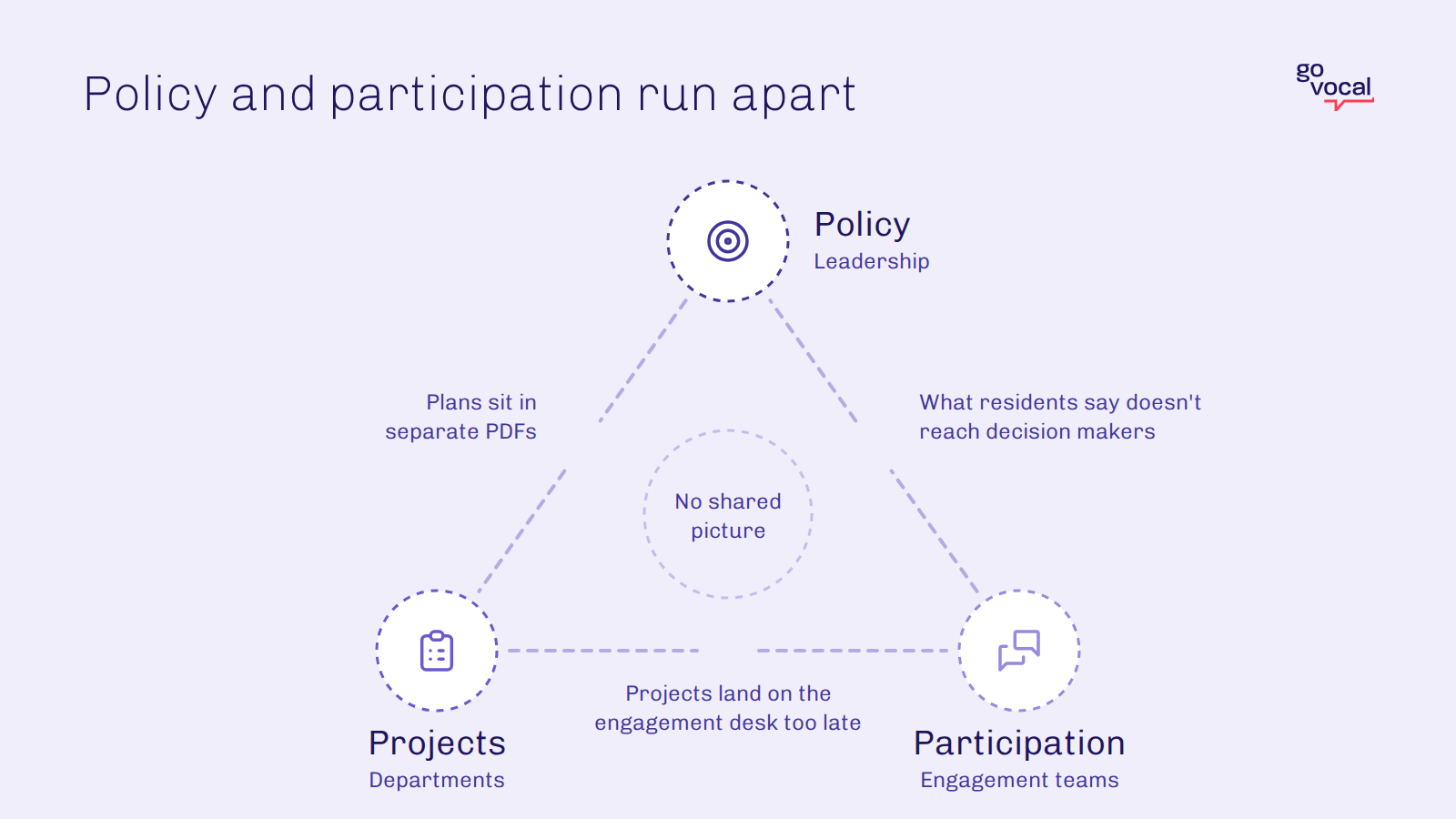
In the governments I visited, three things kept getting in the way:
1. Leadership's priorities and engagement run on separate tracks
Every government has a strategic plan: leadership's roadmap, the set of promises they'll be judged on. And yet, engagement teams rarely work from it. They work from requests: a department needs input, a deadline is close, a consultation goes live.
So the topics residents are asked about aren't always the ones that matter most to the plan, and leadership has no clear view of what residents are saying about the priorities it's trying to deliver.
Our own data shows the gap. In our 2024 client survey, "influencing the political agenda" ranked lower among governments' engagement priorities than reaching more people or improving process quality. And the score for engagement's impact on the political agenda barely moved, from 5.5 to 6.0. Teams are getting better at running engagement, but connecting it to the decisions that matter is still the hard part.
2. Engagement arrives after the decisions are shaped
What departments plan to do, and when, is written down in their mobility plans, climate plans and housing plans, but those plans live in separate PDFs that are approved, published and rarely looked at together.
While one department is preparing a major neighborhood redesign, the engagement team might not hear about it until the week before launch, sometimes the day before. By then, the important choices have been made. Leaders get input when it's too late to steer, and residents can tell when a decision already feels made.
Practitioners recognize this. When we asked in our October webinar which challenges they face, the two that came up most were consultation requests landing at the last minute and having no live view of progress on strategic goals.
3. Residents' input doesn't shape what happens next
Even well-run engagement often ends in a report. The results reach the project team, maybe the residents who took part, and then stop. They seldom find their way back to the strategic plan or the people setting broader priorities. That means governments risk missing something valuable. Across all those projects, residents tell them what matters, and those insights could shape the next round of decisions.
Our Public Participation Trends 2026 points to the same shift: participation is increasingly judged on whether it informs decisions, and leaders are working more directly with participation data to explain the choices they make. When that link exists, it changes how leaders act.
The City of Allen, Texas, built its engagement around its comprehensive plan update, Allen 2045. Council members had direct access to transparent, unfiltered community feedback, and that gave them the confidence to act on it.
When policy and participation reinforce each other
Allen shows what's possible when the link is there. What struck me most during my visits is that the answer is often already there, in a PDF. The projects, the priorities, and often even the timelines are written down in strategic plans and departmental roadmaps. We don't need governments to make more plans: we need to get better at connecting the plans they already have.
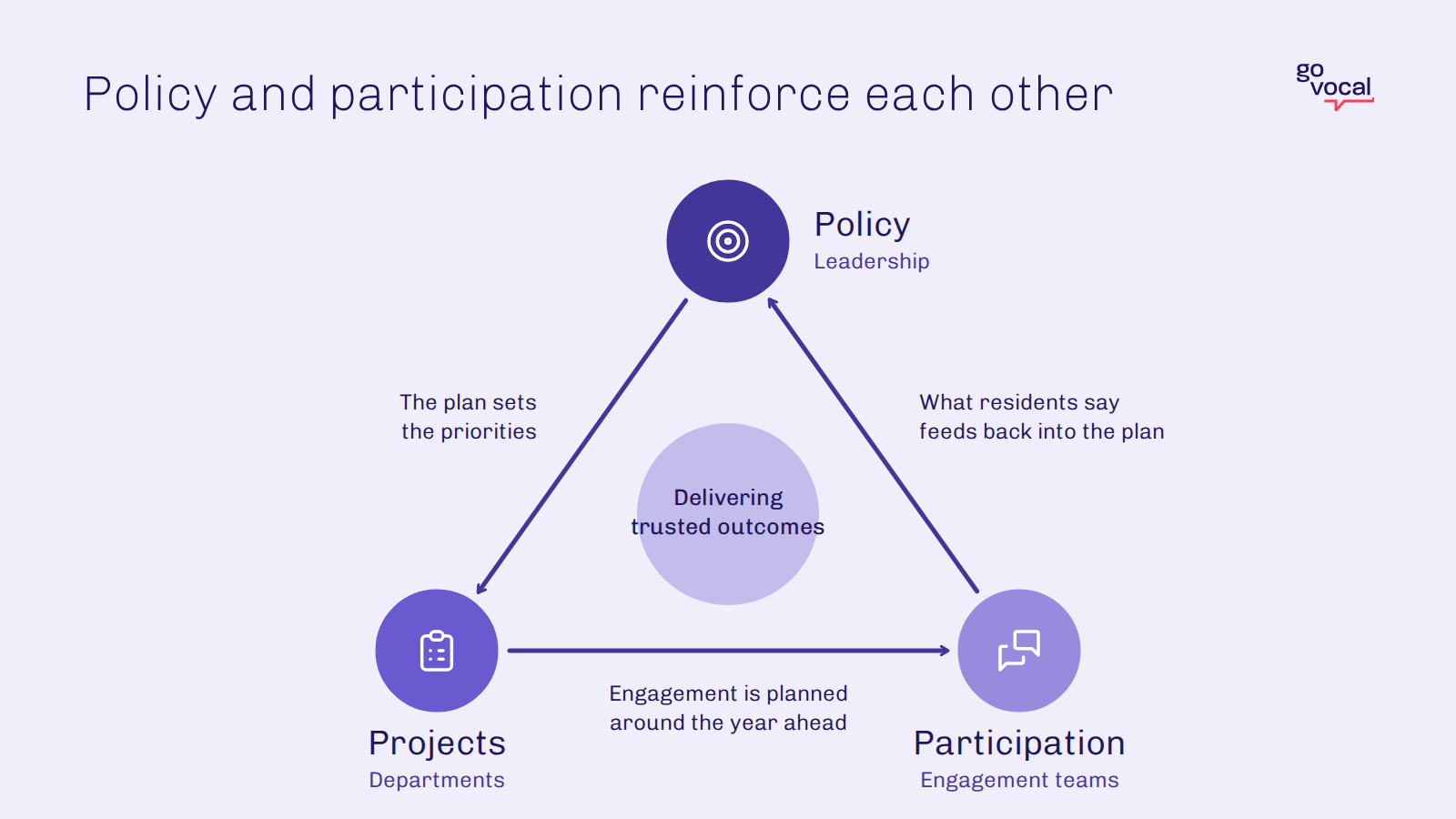
In the strongest teams I met, that's exactly what happens: the strategic plan is the engagement agenda. They look across departments at what's coming in the year ahead, decide where residents' input can still shape the outcome, and plan their engagement around those moments. Then they feed what they hear back into the plan, and report back to residents on what was delivered.
That turns engagement into a way to take the community along the whole policy cycle, from the first promise to the final result.
Policy gives participation its purpose: it tells you which decisions residents should help shape.
Participation gives policy its legitimacy: it shows leaders what their community supports, and shows residents what was delivered together.
This is where everyday democracy happens. Most of what leaders deliver is far from the headlines: the local park, the playground, the new mobility plan. One park redesign won't make the front page. But when every promise in a strategic plan is shaped with residents and reported back to them, that's where trust is built.
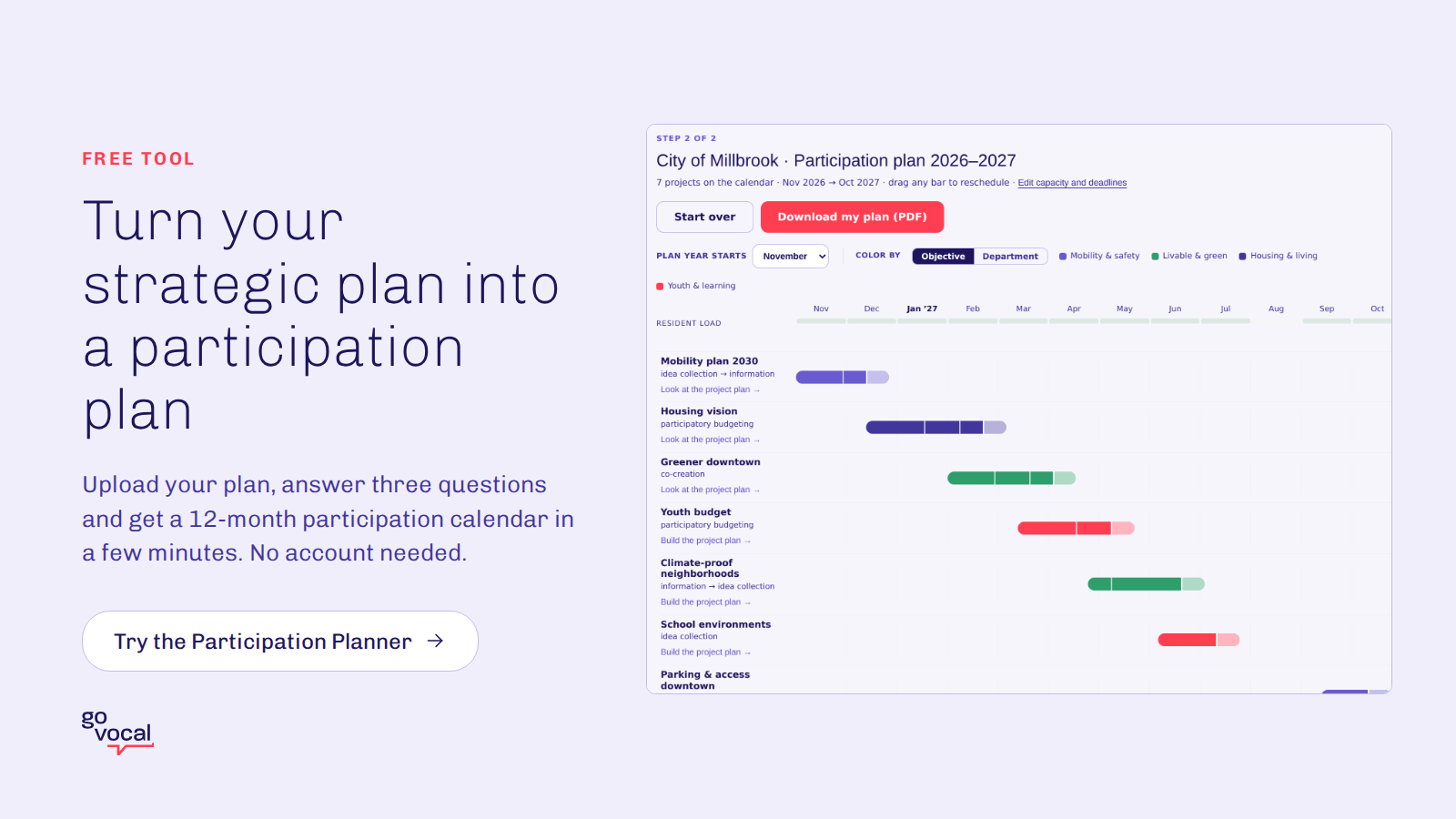
Want a head start? Our free Participation Planner turns your strategic plan into a draft 12-month participation calendar in a few minutes, with no account needed.
What comes next
So here's my challenge for 2027: open your strategic plan, look at the promises your government has made, and ask where residents should help shape how they're delivered. Start there, and let your engagement follow.
We've spent years getting better at asking residents what they think. The next step is making sure what they tell us shapes what governments deliver. That's how everyday democracy becomes part of delivering on promises, one decision at a time.
Join the conversation
On November 12, I'll share what we've learned from 35,000 engagement projects across our community, including what residents engage with, where participation is growing, and what it means for planning engagement in 2027. We'll follow up on November 25 with practical sessions in the UK, the Netherlands and Flanders.
Further reading
Participation without policy is a microphone nobody plugged in
Governments have become very good at engaging residents. Yet much of that participation never reaches the decisions leaders care about most. So how can policy and participation reinforce each other?


Budget season 2026: why engagement is your most important step in budget planning
Budget planning as we know it is changing. It still means looking into what can be allocated where and often making hard trade-offs. But, with shifting financial settlements and a three-year financial plan, it's important to remember: the planning cycle begins with understanding residents.
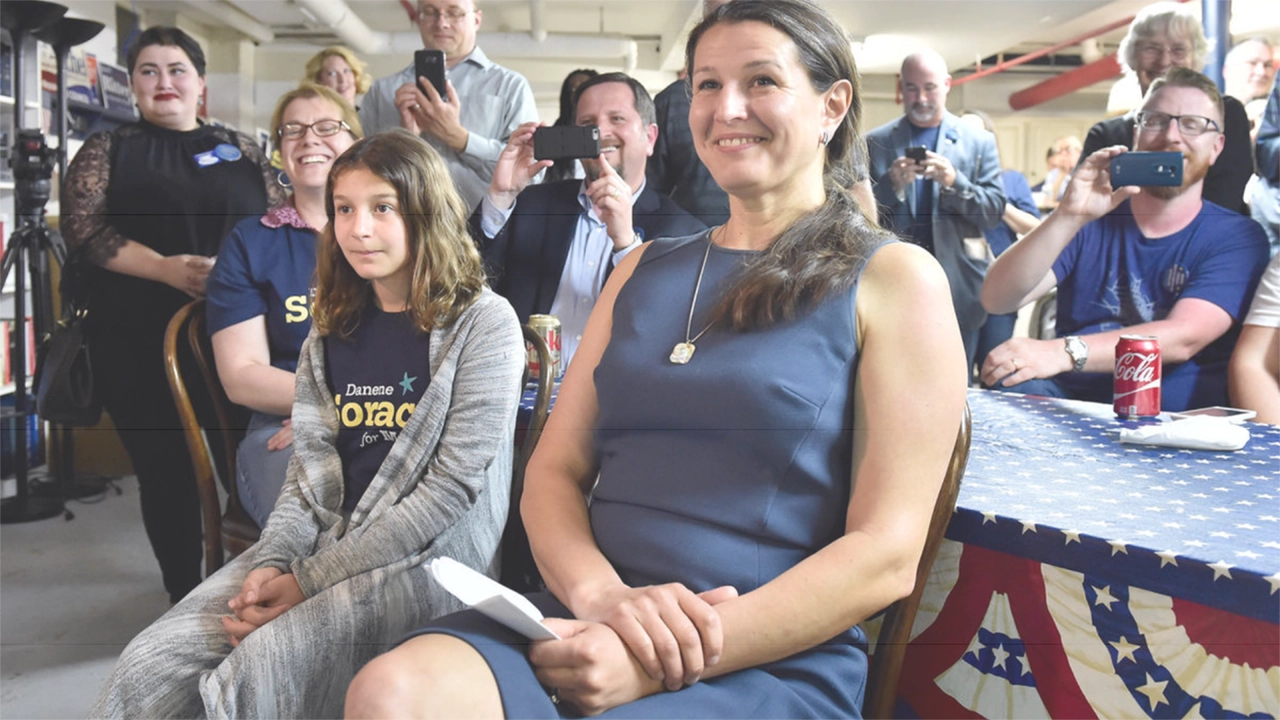
Mayor Danene Sorace joins Go Vocal as Senior Strategic Advisor
Building effective engagement tools is half the problem. Building a city where tools drive real change is the harder half. Lancaster, Pennsylvania, accomplished this over the past eight years, and the mayor who led that work is now on our team.